
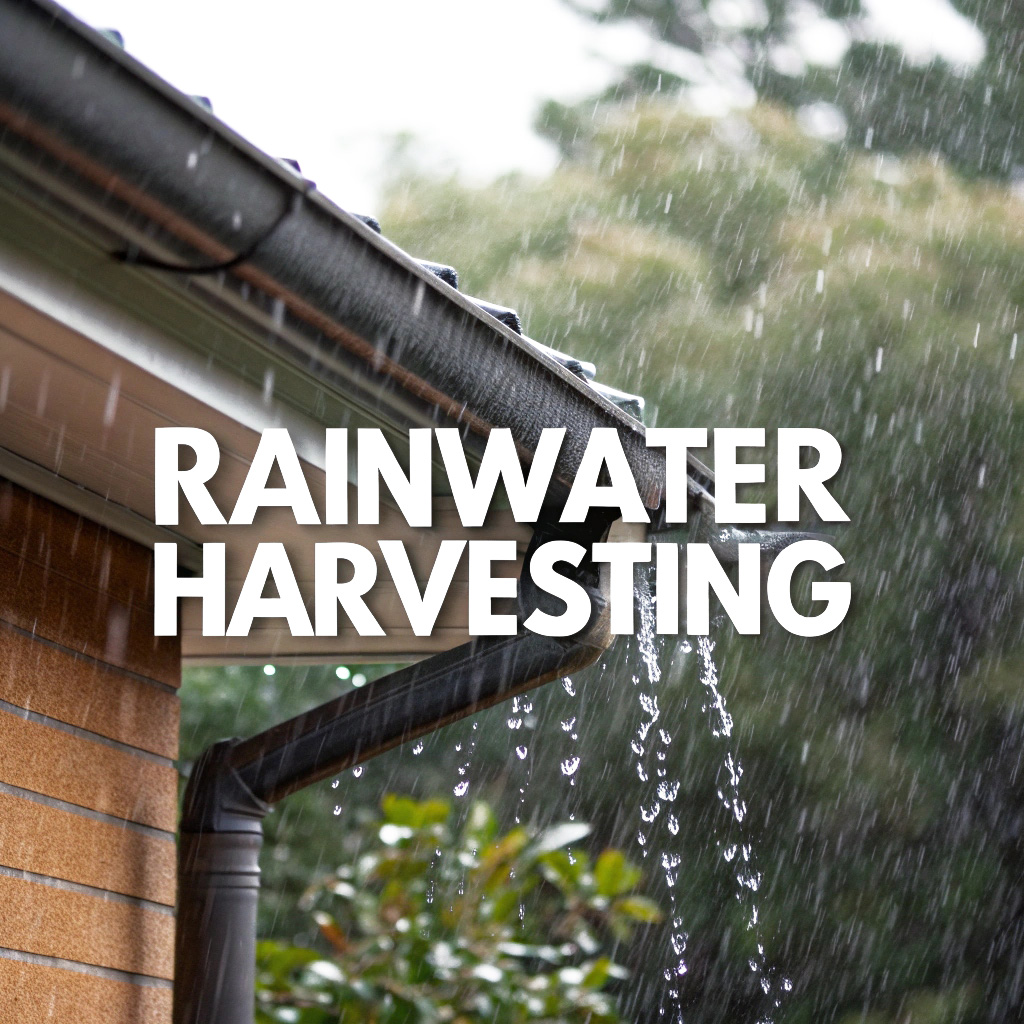
Islamabad is entering a new era of sustainable urban development. With water scarcity becoming a serious concern, the Capital Development Authority (CDA) has taken a bold and future-focused step by making rooftop rainwater harvesting systems compulsory for buildings across the city.
This is not just another regulation—it is a game-changing policy that directly impacts:
- Property owners
- Builders & developers
- Real estate investors
- Housing societies
If you are planning to build, invest, or sell property in Islamabad, understanding this policy is now essential—not optional.
Islamabad’s Water Crisis – The Real Reason Behind This Policy
Islamabad, once known for its natural water abundance, is now facing increasing pressure due to:
- Rapid population growth
- Expansion of housing societies
- Over-extraction of groundwater
- Irregular rainfall due to climate change
Experts warn that groundwater levels are falling at an alarming rate, and without immediate action, the city could face severe shortages in the coming years.
Why This Matters for Property Owners
If water becomes scarce:
- Property value declines
- Living standards drop
- Dependence on costly water tankers increases
👉 CDA’s policy is designed to prevent this future crisis today.
What Exactly is CDA’s Rainwater Harvesting Rule?
The Capital Development Authority (CDA) has incorporated rainwater harvesting into its building approval regulations.
Key Requirements:
✔ Rainwater harvesting system is mandatory for all new constructions
✔ Applicable to residential, commercial, and large-scale buildings
✔ Building plans will NOT be approved without it
✔ System must include:
- Rooftop water collection
- Filtration system
- Storage tank
- Groundwater recharge well
👉 Simply put:
No Rainwater Harvesting System = No CDA Approval
How Rooftop Rainwater Harvesting Works (Step-by-Step)


9
Understanding the system is simple:
1. Rooftop Collection
Rainwater is collected through rooftop surfaces and directed into pipes.
2. Filtration
Dust, leaves, and debris are removed using a basic filtration system.
3. Storage Tank
Filtered water is stored in underground or overhead tanks for reuse.
4. Recharge Well
Excess water is directed into the ground, helping replenish groundwater levels.
Why This Policy is Actually GOOD for You
Many people initially see this as a “burden,” but in reality, it’s a hidden opportunity.
💰 1. Save Money on Water
- Reduce dependency on tanker water
- Lower long-term utility costs
📈 2. Increase Property Value
- Eco-friendly homes sell faster
- Higher demand among modern buyers
- Better resale and rental potential
🌱 3. Future-Proof Investment
- Compliance with future regulations
- Sustainable living trend is rising globally
🌍 4. Environmental Responsibility
- Helps recharge underground water
- Reduces urban flooding
- Supports green Islamabad vision
Cost of Rainwater Harvesting System in Islamabad
One of the most common concerns is cost.
Estimated Cost Range:
| Property Size | Approx Cost |
|---|---|
| 5–10 Marla | PKR 80,000 – 200,000 |
| 1 Kanal | PKR 200,000 – 500,000 |
| Commercial | PKR 500,000+ |
👉 Important Insight:
This is a one-time investment that saves money for years.
Legal & Approval Impact – What You Must Know
If you ignore this requirement:
❌ Your building plan may be rejected
❌ Construction approvals can be delayed
❌ Property resale may become difficult
If you comply:
✅ Faster CDA approvals
✅ Higher buyer trust
✅ Smooth legal documentation
Impact on Islamabad Real Estate Market
This policy is already reshaping the market:
1. Shift Toward Eco-Friendly Housing
Buyers now prefer smart & sustainable homes
2. Competitive Advantage for Compliant Properties
Properties with installed systems are:
- Easier to sell
- Higher in demand
- Viewed as “premium”
3. Increased Demand for Smart Construction Experts
Builders who understand CDA regulations will dominate the market.
Common Mistakes to Avoid
Many property owners make costly errors:
❌ Installing non-approved systems
❌ Ignoring recharge wells
❌ Poor filtration setup
❌ Not including system in building drawings
👉 Always consult professionals before installation.
Step-by-Step Guide to Compliance
If you are building a house:
Step 1: Design Planning
Include rainwater harvesting in your architectural drawings.
Step 2: CDA Approval
Ensure system is part of submitted plan.
Step 3: Installation During Construction
Install pipes, filters, and tanks during construction phase.
Step 4: Final Inspection
Ensure system is functional and approved.
Future of Islamabad – Smart & Sustainable Living
Islamabad is moving toward:
- Smart housing
- Green building regulations
- Water-efficient infrastructure
👉 This policy is just the beginning.
In the future, expect:
- Solar systems becoming mandatory
- Water recycling systems
- Eco-friendly construction standards
Why You Should Act NOW
If you delay:
- Construction costs may increase
- Regulations may become stricter
- Market competition will rise
If you act now:
✅ You stay ahead of the market
✅ You save money
✅ You gain a competitive edge
Build Smart. Invest Smart. Stay CDA-Compliant.
At Ghandhara Estate, we provide complete guidance for:
✔ CDA-approved building plans
✔ Rainwater harvesting system integration
✔ Smart property investment in Islamabad
✔ Buying & selling premium plots and houses
📞 Get FREE Consultation Today
👉 Planning to build your house?
👉 Want CDA approval without hassle?
👉 Looking for high-return investment in Islamabad?
Contact Ghandhara Estate NOW:
📲 Call / WhatsApp: +92-300-9568645
🌐 Website: Ghandhara Estate
📍 Location: Islamabad / Rawalpindi
🎯 Limited-Time Offer
💡 FREE Expert Consultation for first-time clients
💡 Complete guidance on CDA rainwater compliance
💡 Best investment deals in Islamabad sectors
Final Words
The decision by the Capital Development Authority (CDA) to make rooftop rainwater harvesting compulsory is not just a regulation—it is a vision for a sustainable Islamabad.
Smart investors and homeowners will see this not as a burden, but as an opportunity to lead the future of real estate.
- What is the difference between a real estate agent and a real estate broker?
- Why should I use a real estate salesperson?
- I have a family friend who is a Realtor. I like her and she is a help but she gives me one price to sell my home for and I think it is too low. So I called another agent who suggested a price more in line with my expectations. Who do I choose?
- I have to make a choice between an updated home in an older neighborhood or a newer home in a more modern neighborhood. The home in the older neighborhood has almost everything I want and is much larger, but which makes the most sense as an investment?
- When buying a new home, what upgrades should we go for? What holds the most value? Do we upgrade the lot? Pick more square footage in the house? Add an extra bedroom?, etc.
What is the difference between a real estate agent and a real estate broker?
Most states require real estate sales professionals to be licensed by the state, so that they can control education and experience requirements and have a central authority to resolve consumer problems.
The terminology used to identify real estate professionals varies a little from state to state. Brokers are generally required to have more education and experience than real estate salespersons or agents.
The person you normally deal with is a real estate agent or salesperson. The salesperson is licensed by the state, but must work for a broker. All listings are placed in the broker’s name, not the salesperson’s.
A broker can deal directly with home buyers and sellers, or can have a staff of salespersons or agents working for him or her.
Back to Index
Why should I use a real estate salesperson?
A real estate salesperson is more than just a “sales person.” They act on your behalf as your agent, providing you with advice and guidance and doing a job – helping you buy or sell a home. While it is true they get paid for what they do, so do other professions that provide advice, guidance, and have a service to sell –such as Certified Public Accountants and Attorneys
The Internet has opened up a world of information that wasn’t previously available to homebuyers and seller. The data on listings available for sale is almost current – but not quite. There are times when you need the most current information about what has sold or is for sale, and the only way to get that is with an agent.
If you’re selling a home, you gain access to the most buyers by being listed in the Multiple Listing Service. Only a licensed real estate agent who is a member of your local MLS can get you listed there – which then gets you automatically listed on some of the major real estate web sites. If you’re buying or selling a home, the MLS is your agent’s best tool.
However, the role of an agent has changed in the last couple of years. In the past, agents were the only way home buyers and sellers could access information. Now agents are evolving. Because today’s home buyers and sellers are so much better informed than in the past, expertise and ability are becoming more important.
The real estate agent is becoming more of a “guide” than a “salesperson” — your personal representative in buying or selling a home.
Back to Index
I have a family friend who is a Realtor. I like her and she is a help but she gives me one price to sell my home for and I think it is too low. So I called another agent who suggested a price more in line with my expectations. Who do I choose?
You might want to consult a couple more Realtors on the market value of your home. Most of the estimates should be in the same ballpark.
It could be that your friend is being more honest with you about the value of your home and the other Realtor gave you a higher number because he already knew you expected it. This is called “Buying a Listing” and is the subject of an article on our web site.
Or it could simply be that your friend is a good friend, but not that great of a real estate agent.
Mixing business and friendships is always risky to the friendship. On the other hand, if your friend is truly competent and was providing wise advice, she may be offended if you ignore the advice and choose another agent.
Back to Index
I have to make a choice between an updated home in an older neighborhood or a newer home in a more modern neighborhood. The home in the older neighborhood has almost everything I want and is much larger, but which makes the most sense as an investment?
If your goal is to buy a home for it’s resale value and the one you are thinking of buying in the older neighborhood is at the upper end of values for that neighborhood, then it may not be the wisest choice. If it is similar or lower in price to the others, then there should be no problem, because pricing should be considered in relation to the local neighborhood and not compared to homes in other neighborhoods (for the most part)
Plus, is it a neighborhood on the decline, or are others going to be fixing things up, too, so that it is a neighborhood that is improving? It could turn out to be a very good deal as long as you don’t “overpay” because of the recent improvements.
Remember that you also buy a home for it’s value to you as a “home,” and that is something else you should consider. Which neighborhood would you AND your family feel most comfortable in?
Back to Index
When buying a new home, what upgrades should we go for? What holds the most value? Do we upgrade the lot? Pick more square footage in the house? Add an extra bedroom?, etc.
A lot depends on why you are buying the house. Are you buying it mostly as a home or mostly as an investment? There is a difference.
For the most part, upgrades are high-profit items for builders. They aren’t designed to enhance the value of the house, but make you happier with the house you do buy.
If you are looking at your home as an investment, then you buy from the smaller to medium size in the tract and spend only a minimal amount on upgrades. If you are looking at your purchase as a home, then you select upgrades that will enhance your quality of living.
One rule of thumb is to always upgrade the carpet and padding.
Back to Index
Yes, the Capital Development Authority has made it mandatory for all new constructions.
What is the cost of rainwater harvesting system in Pakistan?
It typically ranges from PKR 80,000 to 500,000 depending on property size.
Can old houses install this system?
Yes, it can be retrofitted in existing houses.
